NCOI opleiding business development 2021
Hoe lange termijn groeiopportuniteiten vinden, selecteren en ontwikkelen?
Leer meer tijdens deze NCOI - strategische opleiding business development
![[Commercial innovation] Why are business ecosystems suddenly such a hot topic?](https://images.squarespace-cdn.com/content/v1/56f53cf6b09f955f052e3847/1587549181355-FNS50J4RZM7T4B0BS56S/%5BNewRulesofCompetitiveAdvantage%5D+Ecosystems.JPG)
[Commercial innovation] Why are business ecosystems suddenly such a hot topic?
[Commercial innovation] About the Rise of [Eco-systems] to create [Competitive Advantage]. Interesting article from Julian Birkinshaw, who is Deputy Dean and Professor of Strategy and Entrepreneurship at the London Business School. Published in HBR, August 08, 2019
Interesting article about the Rise of [Eco-systems] to create [Competitive Advantage] from Julian Birkinshaw, who is Deputy Dean and Professor of Strategy and Entrepreneurship at the London Business School.
![[OldRulesofCompetitiveAdvantage]-HowtoBuildaMoat.jpg](https://images.squarespace-cdn.com/content/v1/56f53cf6b09f955f052e3847/1587547920400-BTAN5PVWF467IJWHU3C6/%5BOldRulesofCompetitiveAdvantage%5D-HowtoBuildaMoat.jpg)
New Rules: Ecosystem Thinking
The rapid growth of business ecosystems in recent years challenges this ‘Deep Moat’ -thinking. Most of the ecosystem orchestrators, like Google, Alibaba, and Uber, don’t make the things they sell; they exist to link others together, and this makes the old positioning-based logic less relevant. And, of course, they don’t have many assets, either. They create value through relationships and networks, not through physical goods or infrastructure, so arguments built around asset ownership are equally challenging. These firms are also looking to grow the market — by increasing the flow of people and goods — rather than to capture as much of the existing market as possible.
The Old and New Rules of Competitive Advantage
Old Rules: Deep Moats
The moat is what protects the business from competitors. Sometimes it is based on access to a scarce resource or ownership of a patent, sometimes it is based on customer loyalty and a strong brand, and sometimes it is an artifact of government regulation.
![Thrust - [Business Ecoystems]](https://images.squarespace-cdn.com/content/v1/56f53cf6b09f955f052e3847/1587549047555-XDOOKZQ499LNF4JOP0HK/%5BNewRulesofCompetitiveAdvantage%5D+Ecosystems.JPG)
Thrust - [Business Ecoystems]
![Thrust - [Business Eco Systems -Keep customers flowing in]](https://images.squarespace-cdn.com/content/v1/56f53cf6b09f955f052e3847/1587551101531-SCOK6UKVRFE6FHPWU27B/Thrust+-%5BBusiness+Eco+Systems%5D+Keep+customers+flowing+in.jpg)
Thrust - [Business Eco Systems -Keep customers flowing in]
Some advice for what to focus on
Keep customers flowing in - You need to give people a reason to participate in your eco-system
Give people a reason to stick around - A vibrant ecosystem is one where participants gain value in multiple ways
Don’t steal your partners’ business - Operate as an ecosystem where all participants have an opportunity to prosper
Keep evolving - One huge benefit of being an ecosystem orchestrator is privileged access to information about the entire ecosystem. The smarter approach is to use this information to keep things moving — to open up new markets, and to do this quicker than your competitors.
Ecosystems challenges
This ecosystem-based approach to strategy isn’t for everyone.
As a way of working, it is inherently more stressful and chaotic than the more traditional moat-based approach.
It attracts a lot of challengers.
The split between the worlds of moats and turnstiles isn’t absolute
![Thrust -[Business Eco Systems] TheWayofWorkingismoreChaotic.jpg](https://images.squarespace-cdn.com/content/v1/56f53cf6b09f955f052e3847/1587551606190-BT23DA762NX8KJQT0MJV/Thrust+-%5BBusiness+Eco+Systems%5D+TheWayofWorkingismoreChaotic.jpg)
![[Covid-19] The new normal for companies after Covid-19](https://images.squarespace-cdn.com/content/v1/56f53cf6b09f955f052e3847/1587640934806-1R827983ICMO1MDPEC37/McKinsey+The+New+Normal.jpg)
[Covid-19] The new normal for companies after Covid-19
The new normal for companies after Covid-19.
The future is not what it used to be: thoughts on the shape of the next Normal.
The new Normal
““The future is not what it used to be: Thoughts on the shape of the next normal””

Distance is back
Resilience and efficiency
The rise of the contact-free economy
More government intervention in the economy
More scrutiny for business
Changing industry structures, consumer behavior, market positions, and sector attractiveness
Finding the silver linings
![[Covid-19] Changing consumer behavior in different countries](https://images.squarespace-cdn.com/content/v1/56f53cf6b09f955f052e3847/1587639926295-0HCLOHWZQXS24QQDVV2M/BCG+-+consumer+cancellations+of+typical+activities.png)
[Covid-19] Changing consumer behavior in different countries
Interesting article about changing consumer behavior related to the Corona crisis and the following recovery. Predictably, consumers’ willingness to resume activities—even at a minimal level—tends to be closely correlated with their views on when the virus is under control.
[Covid-19] Changing consumer behavior in different countries during covid-19. How do consumers react and what do they think about the restart / future?
The impact of health and safety measures
As companies look ahead, many are considering adopting various health and safety measures to encourage customer reengagement after the lockdowns. Many consumers say that such changes would favorably influence their readiness to resume activities, suggesting that introducing the right health and safety measures could accelerate recovery.
Social distancing, the availability of hand sanitizers, and regular antiviral cleaning are the options that most increase consumers’ likelihood of resuming daily activities.

“Interesting article about changing consumer behavior related to the Corona crisis and the following recovery. Predictably, consumers’ willingness to resume activities—even at a minimal level—tends to be closely correlated with their views on when the virus is under control.”

Various health and safety measures to encourage customer reengagement
![[Covid-19] trajectories vary widely. Win the fight, win the future.](https://images.squarespace-cdn.com/content/v1/56f53cf6b09f955f052e3847/1587624477923-QJJZPBXLLDNR4KIUUAKJ/BCG+-+5+questions+will+shape+economic+outcomes+-+Scenarios+Corona+.png)
[Covid-19] trajectories vary widely. Win the fight, win the future.
5 questions will shape economic outcomes
It is possible to draw conclusions from these outcomes and define three distinct phases: flatten, fight, and future
5 questions will shape economic outcomes
It is possible to draw conclusions from these outcomes and define three distinct phases: flatten, fight, and future
Many leaders are asking the same questions:
How should I forecast my revenues?
How should I adjust my budget?
When will this be over, and when will we return to “normal”?
Distinct phases
First, there is the “Flatten” phase, in which countries or cities lock down to flatten the virus’s exponential growth curve. Second comes the “Fight” phase, during which a geography “Restarts” its economy while maintaining a low rate of infection, while still running the risk of having to implement further lockdowns. Finally, we are anticipating a “Future” phase, which begins only after a vaccine or highly effective treatment has been developed and deployed
Each potential scenario will be characterized by five outcome measures
How long is the Flatten phase?
How deep does the Flatten phase go?
How long is the Fight phase?
How deep does the Fight phase go?
What level will the economy achieve during the Future phase?
“Interesting article about what we can learn from crises like the Corona Crisis to restart and restore”

The impact of a pandemic on the economy
To understand what the future might hold and how we can shape those outcomes, we need scenarios to bound the uncertainty and help us understand the underlying drivers of outcomes. While COVID-19 trajectories vary widely, it is possible to draw conclusions from these outcomes and define three distinct phases: flatten, fight, and future.

![[Covid-19] How companies can respond to protect their company?](https://images.squarespace-cdn.com/content/v1/56f53cf6b09f955f052e3847/1587556967392-1TNE2PFCTNPN0SZ36UV9/Bain%26Company-How+to+protect+Cash.jpg)
[Covid-19] How companies can respond to protect their company?
[Covid-19] How companies can respond to protect their company during Covid-19. About war rooms, critical questions about, for example, the stability of the customer base, cash protection, etc.
[Covid-19] How companies can respond to protect their company during Covid-19. About war rooms, critical questions about, for example, the stability of the customer base, cash protection, etc.
Bain & company. Interesting article from Andrea Yandreski and Simon Henderson, April 09, 2020
Act now
Immediate steps to address liquidity:
Step 1: Create a central cash war room - The CFO leads the cash war room with a team drawn from treasury, sales, purchasing and human resources. A war-room approach enables rapid, real-time decision making and focuses leadership teams on the most urgent liquidity needs and cash-preservation actions.
Step 2: Develop a single view of your liquidity position and outlook - Create a 13-week cash-flow forecast This diagnoses the severity of your current position
Step 3: Launch decisive actions to preserve cash - Implement immediate mandates to reduce spending. Act quickly, understanding that speed is essential and initiatives can be temporary.
Step 4: Control all cash outflows - Initiate daily spending review sessions to challenge all purchase requests and instill a ruthless cash-preservation mindset across the organization
What can we deny? Which outlays are not vital to operations and not yet committed?
What can we delay? Where do we have flexibility in timing or credit terms for required spending?
Should we invest? When is the business case for investment justified to enable continued operations?
Step 5: Prepare enterprise models based on different macro scenarios - Modeling helps the leadership team assess the company’s level of exposure, stress test the P&L and develop contingency plans. At a minimum, develop the best-case, base-case and worst-case scenarios. The worst-case scenario should envision a disastrous sequence of events.
Test
A few questions can serve as a litmus test of whether you have a clear view of your liquidity and cash position:
Are we testing the company’s ability to respond to a range of challenging scenarios?
With the current burn rate and cash position, how long could we continue to operate?
What additional sources of capital can we pursue, and what lead time do they require?
How stable is our customer base, and what share of the business comes from our largest customers?
How are receivables trending compared with the budget, considering both sales and payment terms?
Have we identified our most important suppliers, and are we putting their needs first?

How to protect Cash?
5 steps companies can take
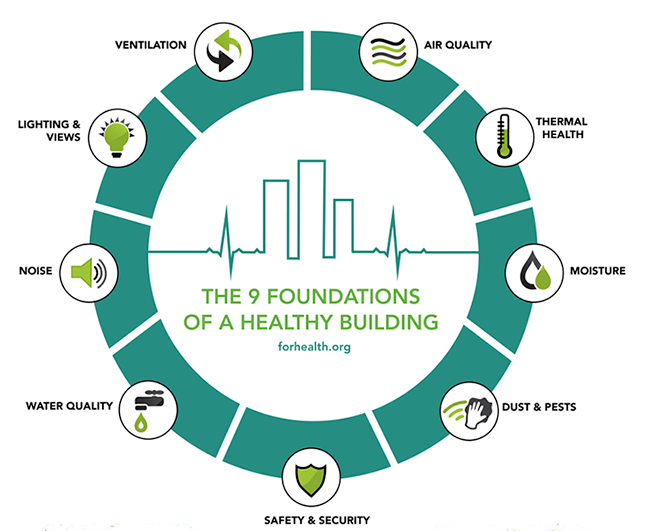
![[Covid-19] The rise of the [Healthy Building Movement]](https://images.squarespace-cdn.com/content/v1/56f53cf6b09f955f052e3847/1587543057152-8BG7W0Y2AG7S4CKFB09F/The+9+Foundations+of+a+Healthy+Building.png)
[Covid-19] The rise of the [Healthy Building Movement]
Humans have become an indoor species, so buildings have a major impact on our health. The rise of the Healthy Building Movement
Like it or not, humans have become an indoor species, so buildings have a major impact on our health. That's why the Healthy Building Movement is gaining momentum, say John Macomber and Joseph Allen.
Working knowledge
Working without concern
