
CXO LEADERSHIP FORUM SUMMER EDITION 2018
CXO LEADERSHIP FORUM SUMMER EDITION 2018 'The new rules for business success in the digital age'. It was fun to participate in the CXO event, with a unique dynamic of cooperation between leaders from different companies

BAIDU’S MELODY - virtual medical assistant
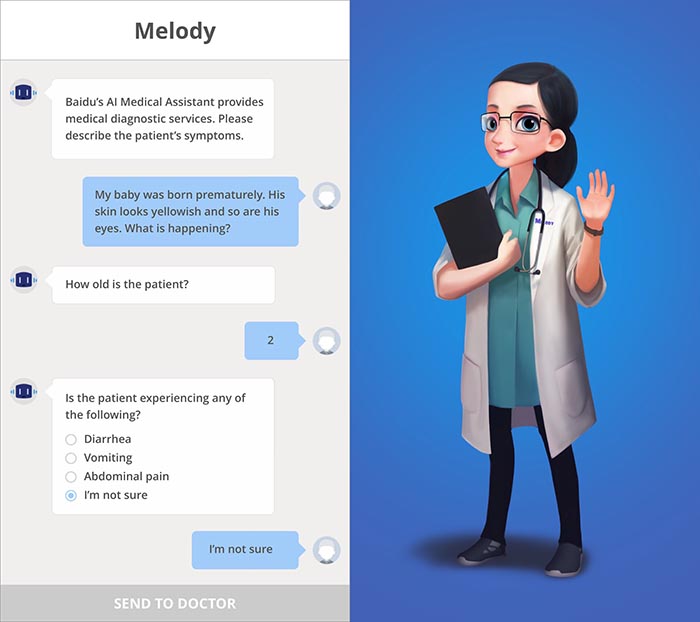
Melody is a virtual medical assistant inside of the Baidu Doctor app in China. The chatbot helps patients articulate their symptoms before seeing a physician.
One common problem doctor’s have with patients is that they often aren’t clear on their own symptoms before booking appointments or seeking medical treatment. Melody the Baidu bot seeks to solve this problem by chatting with patients in an interactive way and helping them articulate their symptoms at the necessary level of detail for physicians.
Maakindustrie en servitisatie: een sterke combinatie
Interessant artikel over servitisatie, nieuwe verantwoordelijkheden voor medewerkers en het belang van een kwalitatieve uitrol in de organisatie.
In dit artikel wordt heel sterk de nadruk gelegd op het belang van een transformatie naar een organisatie waar ALLE medewerkers betrokken en verantwoordelijk zijn voor het 'servicen' van de klanten.
https://www.agoria.be/nl/Maakindustrie-en-servitisatie-een-sterke-combinatie?
Who said it would be easy?
Who said it would be easy? Innovation is more than hard work.

Innovation is the future of any organization. It is, however, more than hard work. Let's be realistic ...
Let's be realistic ...Less than 30% of change programs are successful. Factors responsible for failure of change (including innovation) initiatives are for instance management behavior which is not supportive, the high degree of employee resistance, and the lack of required resources.
How can we improve our success rate?
When we are aware of the following elements from the start of our innovation initiatives, we might have a chance to be among the 30% successful change programs:
- Innovation needs to be done when it goes well with the business: when it goes badly with the business, it is really too late to have time, money, people and other resources available for innovation initiatives. Especially when we know that in any innovation project, there is a chance that this initiative will not reach the finish line. On the other hand, in a business where it is going well, there is not enough pressure to innovate drastically. It ripples further based on the current successes and it makes little sense to innovate and change thoroughly. Therefore ... put always pressure on innovation projects by reducing available time and resources.
- Each innovation group contains intrinsically more or less innovation potential: 'super designers' no longer exist. Innovation happens in team. The team potential is determined by the presence of participants with different mental models (how they look differently at the world) and different backgrounds (academic , jobs, community), the willingness to work in a team and to learn collectively (also under pressure and when it goes badly). Preferably, the team may not only consists of creative people. Even more conservative people are needed in the team. Finally, they should be able to decide autonomously, how they will work together (no pre-assigned processes).
- Welcome to the war zone: it is known that many successful changes and innovations have come only after a lot of struggle and after reaching the bottom. So if you realize that on the road to success, you will have to convince management and employees more than once, you will have to deal with conflicts in the innovation team which will need to be resolved, innovation and change will best be done with limited resources and by working under time constraints, that there will be a chance that even the current business model will be thoroughly shaken, and that indeed the company may have to opt for a comprehensive transformation rather than a small change, ...you're on the winning side. It is perhaps best compared with the mentality, entrepreneurship and the growing pains of a start up or scale up.
![[Service design] - What makes a customer really happy?](https://images.squarespace-cdn.com/content/v1/56f53cf6b09f955f052e3847/1588082493343-TO1H22CSB6ODQUUVTLN6/Canva+-+Closeup+Photo+of+Gray+and+Black+Custom+Frame.jpg)
[Service design] - What makes a customer really happy?
What makes a customer really happy?
Nowadays, [value propositions], [segmentation] and [market approaches] based on [customer / buyer journeys and personae], are an integral part of modern commercial policy. But is this enough to make a [competitive difference]?
Read more

Listen to customers
An easy but very powerful key question in commercial innovation. What you really want to know about your (potential)customers…
What makes a customer really happy?
![[Commercial innovation] Happy Customers](https://images.squarespace-cdn.com/content/v1/56f53cf6b09f955f052e3847/1588073257358-OWJDUX6VWUIWGMWPAFUU/%5Bcommercial+innovation%5D+Happy+customers.jpg)
[Commercial innovation] Happy Customers

Nowadays, value propositions, segmentation and market approaches based on customer / buyer journeys and personae, are an integral part of modern commercial policy. But is this enough to make a competitive difference?
Sometimes companies forget to focus on the main DRIVER and main reason for commercial innovation initiatives. ‘What makes a customer really happy?’ is the underlying core question to gain in-depth insights into the customer's needs and wishes, their motives and emotional involvement, from the development of new services, from their commercialization, and from the daily realization of these services.
In summary, we can say that it is the personal context related to the the underlying question of what makes a customer really happy, that is more determining than only the technical writing of personae, journeys and value propositions.
If we are able to develop an 'iterative approach' to be in permanent contact with customers and prospects, to understand their real (emotional) challenges, to relate their personal context to our solutions and innovations, to transfer it optimally to the daily operational activities, then we create added value. ‘What makes the customer really happy?”, is the core question that every employee should ask him-/herself permanently.
Developing new services, products or even new customer approaches, without a clear answer to this key core question doesn't solve anything. In many companies, marketing teams, design teams and R & D teams are working on the (commercial) innovations of the future, but at a great distance from the end user / customer.
Therefore these 5 tips

Learn from ‘them’, co-create and test together
Learn about 'them': learn and experience the customer in real life and their personal context, and not only from desk research. Test and co-create with customers at all stages of innovation and even during the roll out. Learn about the actual impact of competition on your customers and prospects.
Involve marketing and sales from the start: they know the customers in a different way and have access to them. By involving them actively from the start, it will become also easier for them to sell or market these new services and products afterwards. They will better understand what the added value for the customer will be.

Involve marketing and sales from the beginning

In-depth interviews
Create a system of Learning Cycles: make use of short learning cycles with internal and external customers as important test. Adjust quickly in the learning process after interaction with and feedback of the customers. Build, measure, learn, build further!

Quality of ideas * execution = value
Understand happiness: learn how to work with in-depth interviews, panels or focus groups in all phases of the development / commercial innovation. Go to the bottom to understand in detail what 'Happy' really means and how this can be reached during the customer journey towards happiness.

Learning cycles
Don't forget
'The Quality of ideas * Execution = Value' The world’s simplest formula… explains why you can’t forget commercialization. Develop and test therefore The Most Valuable Commercial Approach.
Business model innovation
Commercial innovation by developing a new business model
Commercial innovation by developing a new business model, is one of the possibilities to create added customer value.
What is the best way to do it?
You can find some interesting tips about developing a new business model in the video from the University of St Gallen, Switzerland. (By Prof. Dr. Oliver Gassman). The video is also about typical myths in innovation.
Click here to read more about our services.
If you want more information about commercial innovation by developing a new business model, CONTACT THRUST
For more information on business model innovation, go to www.bmi-lab.ch