NCOI opleiding business development 2021
Hoe lange termijn groeiopportuniteiten vinden, selecteren en ontwikkelen?
Leer meer tijdens deze NCOI - strategische opleiding business development
![[Commercial innovation] Why are business ecosystems suddenly such a hot topic?](https://images.squarespace-cdn.com/content/v1/56f53cf6b09f955f052e3847/1587549181355-FNS50J4RZM7T4B0BS56S/%5BNewRulesofCompetitiveAdvantage%5D+Ecosystems.JPG)
[Commercial innovation] Why are business ecosystems suddenly such a hot topic?
[Commercial innovation] About the Rise of [Eco-systems] to create [Competitive Advantage]. Interesting article from Julian Birkinshaw, who is Deputy Dean and Professor of Strategy and Entrepreneurship at the London Business School. Published in HBR, August 08, 2019
Interesting article about the Rise of [Eco-systems] to create [Competitive Advantage] from Julian Birkinshaw, who is Deputy Dean and Professor of Strategy and Entrepreneurship at the London Business School.
![[OldRulesofCompetitiveAdvantage]-HowtoBuildaMoat.jpg](https://images.squarespace-cdn.com/content/v1/56f53cf6b09f955f052e3847/1587547920400-BTAN5PVWF467IJWHU3C6/%5BOldRulesofCompetitiveAdvantage%5D-HowtoBuildaMoat.jpg)
New Rules: Ecosystem Thinking
The rapid growth of business ecosystems in recent years challenges this ‘Deep Moat’ -thinking. Most of the ecosystem orchestrators, like Google, Alibaba, and Uber, don’t make the things they sell; they exist to link others together, and this makes the old positioning-based logic less relevant. And, of course, they don’t have many assets, either. They create value through relationships and networks, not through physical goods or infrastructure, so arguments built around asset ownership are equally challenging. These firms are also looking to grow the market — by increasing the flow of people and goods — rather than to capture as much of the existing market as possible.
The Old and New Rules of Competitive Advantage
Old Rules: Deep Moats
The moat is what protects the business from competitors. Sometimes it is based on access to a scarce resource or ownership of a patent, sometimes it is based on customer loyalty and a strong brand, and sometimes it is an artifact of government regulation.
![Thrust - [Business Ecoystems]](https://images.squarespace-cdn.com/content/v1/56f53cf6b09f955f052e3847/1587549047555-XDOOKZQ499LNF4JOP0HK/%5BNewRulesofCompetitiveAdvantage%5D+Ecosystems.JPG)
Thrust - [Business Ecoystems]
![Thrust - [Business Eco Systems -Keep customers flowing in]](https://images.squarespace-cdn.com/content/v1/56f53cf6b09f955f052e3847/1587551101531-SCOK6UKVRFE6FHPWU27B/Thrust+-%5BBusiness+Eco+Systems%5D+Keep+customers+flowing+in.jpg)
Thrust - [Business Eco Systems -Keep customers flowing in]
Some advice for what to focus on
Keep customers flowing in - You need to give people a reason to participate in your eco-system
Give people a reason to stick around - A vibrant ecosystem is one where participants gain value in multiple ways
Don’t steal your partners’ business - Operate as an ecosystem where all participants have an opportunity to prosper
Keep evolving - One huge benefit of being an ecosystem orchestrator is privileged access to information about the entire ecosystem. The smarter approach is to use this information to keep things moving — to open up new markets, and to do this quicker than your competitors.
Ecosystems challenges
This ecosystem-based approach to strategy isn’t for everyone.
As a way of working, it is inherently more stressful and chaotic than the more traditional moat-based approach.
It attracts a lot of challengers.
The split between the worlds of moats and turnstiles isn’t absolute
![Thrust -[Business Eco Systems] TheWayofWorkingismoreChaotic.jpg](https://images.squarespace-cdn.com/content/v1/56f53cf6b09f955f052e3847/1587551606190-BT23DA762NX8KJQT0MJV/Thrust+-%5BBusiness+Eco+Systems%5D+TheWayofWorkingismoreChaotic.jpg)
![[Covid-19] The new normal for companies after Covid-19](https://images.squarespace-cdn.com/content/v1/56f53cf6b09f955f052e3847/1587640934806-1R827983ICMO1MDPEC37/McKinsey+The+New+Normal.jpg)
[Covid-19] The new normal for companies after Covid-19
The new normal for companies after Covid-19.
The future is not what it used to be: thoughts on the shape of the next Normal.
The new Normal
““The future is not what it used to be: Thoughts on the shape of the next normal””

Distance is back
Resilience and efficiency
The rise of the contact-free economy
More government intervention in the economy
More scrutiny for business
Changing industry structures, consumer behavior, market positions, and sector attractiveness
Finding the silver linings
![[Covid-19] Changing consumer behavior in different countries](https://images.squarespace-cdn.com/content/v1/56f53cf6b09f955f052e3847/1587639926295-0HCLOHWZQXS24QQDVV2M/BCG+-+consumer+cancellations+of+typical+activities.png)
[Covid-19] Changing consumer behavior in different countries
Interesting article about changing consumer behavior related to the Corona crisis and the following recovery. Predictably, consumers’ willingness to resume activities—even at a minimal level—tends to be closely correlated with their views on when the virus is under control.
[Covid-19] Changing consumer behavior in different countries during covid-19. How do consumers react and what do they think about the restart / future?
The impact of health and safety measures
As companies look ahead, many are considering adopting various health and safety measures to encourage customer reengagement after the lockdowns. Many consumers say that such changes would favorably influence their readiness to resume activities, suggesting that introducing the right health and safety measures could accelerate recovery.
Social distancing, the availability of hand sanitizers, and regular antiviral cleaning are the options that most increase consumers’ likelihood of resuming daily activities.

“Interesting article about changing consumer behavior related to the Corona crisis and the following recovery. Predictably, consumers’ willingness to resume activities—even at a minimal level—tends to be closely correlated with their views on when the virus is under control.”

Various health and safety measures to encourage customer reengagement
![[Covid-19] trajectories vary widely. Win the fight, win the future.](https://images.squarespace-cdn.com/content/v1/56f53cf6b09f955f052e3847/1587624477923-QJJZPBXLLDNR4KIUUAKJ/BCG+-+5+questions+will+shape+economic+outcomes+-+Scenarios+Corona+.png)
[Covid-19] trajectories vary widely. Win the fight, win the future.
5 questions will shape economic outcomes
It is possible to draw conclusions from these outcomes and define three distinct phases: flatten, fight, and future
5 questions will shape economic outcomes
It is possible to draw conclusions from these outcomes and define three distinct phases: flatten, fight, and future
Many leaders are asking the same questions:
How should I forecast my revenues?
How should I adjust my budget?
When will this be over, and when will we return to “normal”?
Distinct phases
First, there is the “Flatten” phase, in which countries or cities lock down to flatten the virus’s exponential growth curve. Second comes the “Fight” phase, during which a geography “Restarts” its economy while maintaining a low rate of infection, while still running the risk of having to implement further lockdowns. Finally, we are anticipating a “Future” phase, which begins only after a vaccine or highly effective treatment has been developed and deployed
Each potential scenario will be characterized by five outcome measures
How long is the Flatten phase?
How deep does the Flatten phase go?
How long is the Fight phase?
How deep does the Fight phase go?
What level will the economy achieve during the Future phase?
“Interesting article about what we can learn from crises like the Corona Crisis to restart and restore”

The impact of a pandemic on the economy
To understand what the future might hold and how we can shape those outcomes, we need scenarios to bound the uncertainty and help us understand the underlying drivers of outcomes. While COVID-19 trajectories vary widely, it is possible to draw conclusions from these outcomes and define three distinct phases: flatten, fight, and future.

![[Covid-19] How companies can respond to protect their company?](https://images.squarespace-cdn.com/content/v1/56f53cf6b09f955f052e3847/1587556967392-1TNE2PFCTNPN0SZ36UV9/Bain%26Company-How+to+protect+Cash.jpg)
[Covid-19] How companies can respond to protect their company?
[Covid-19] How companies can respond to protect their company during Covid-19. About war rooms, critical questions about, for example, the stability of the customer base, cash protection, etc.
[Covid-19] How companies can respond to protect their company during Covid-19. About war rooms, critical questions about, for example, the stability of the customer base, cash protection, etc.
Bain & company. Interesting article from Andrea Yandreski and Simon Henderson, April 09, 2020
Act now
Immediate steps to address liquidity:
Step 1: Create a central cash war room - The CFO leads the cash war room with a team drawn from treasury, sales, purchasing and human resources. A war-room approach enables rapid, real-time decision making and focuses leadership teams on the most urgent liquidity needs and cash-preservation actions.
Step 2: Develop a single view of your liquidity position and outlook - Create a 13-week cash-flow forecast This diagnoses the severity of your current position
Step 3: Launch decisive actions to preserve cash - Implement immediate mandates to reduce spending. Act quickly, understanding that speed is essential and initiatives can be temporary.
Step 4: Control all cash outflows - Initiate daily spending review sessions to challenge all purchase requests and instill a ruthless cash-preservation mindset across the organization
What can we deny? Which outlays are not vital to operations and not yet committed?
What can we delay? Where do we have flexibility in timing or credit terms for required spending?
Should we invest? When is the business case for investment justified to enable continued operations?
Step 5: Prepare enterprise models based on different macro scenarios - Modeling helps the leadership team assess the company’s level of exposure, stress test the P&L and develop contingency plans. At a minimum, develop the best-case, base-case and worst-case scenarios. The worst-case scenario should envision a disastrous sequence of events.
Test
A few questions can serve as a litmus test of whether you have a clear view of your liquidity and cash position:
Are we testing the company’s ability to respond to a range of challenging scenarios?
With the current burn rate and cash position, how long could we continue to operate?
What additional sources of capital can we pursue, and what lead time do they require?
How stable is our customer base, and what share of the business comes from our largest customers?
How are receivables trending compared with the budget, considering both sales and payment terms?
Have we identified our most important suppliers, and are we putting their needs first?

How to protect Cash?
5 steps companies can take
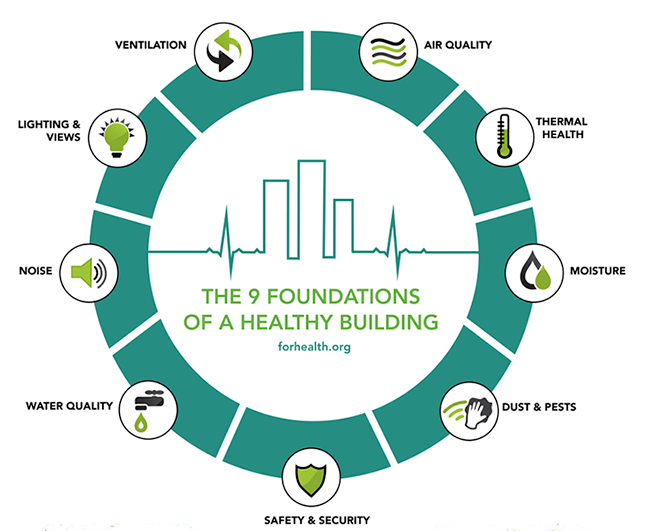
![[Covid-19] The rise of the [Healthy Building Movement]](https://images.squarespace-cdn.com/content/v1/56f53cf6b09f955f052e3847/1587543057152-8BG7W0Y2AG7S4CKFB09F/The+9+Foundations+of+a+Healthy+Building.png)
[Covid-19] The rise of the [Healthy Building Movement]
Humans have become an indoor species, so buildings have a major impact on our health. The rise of the Healthy Building Movement
Like it or not, humans have become an indoor species, so buildings have a major impact on our health. That's why the Healthy Building Movement is gaining momentum, say John Macomber and Joseph Allen.
Working knowledge
Working without concern
The importance of customer centricity and customer experience in B2B
B2B companies will also need to shift to a customer-centered business model

Three Driving Forces in B2B Markets
Consumerization of customer expectations
Distinct characteristics of B2B purchasing
Evolving analytics and algorithms
Four Pillars of Superior Digital Customer Experience
Pillar 1: Comprehensive, Personalized Customer Experiences
Pillar 2: Segmented Customer Needs
Pillar 3: Facilitated Customer Interactions
Pillar 4: Customer-Centered Operating Models

Zero-based customer journey design
Zero-based design
Some interesting tips about how to succesfully transform customer journeys
1. Are all processes in your organization mapped against end-to-end customer journeys?
2. Do you have people with diverse skill sets on your journey-redesign teams?
3. Are your ideation sessions sparking true innovation or derivative ideas?
4. Is your organization as agile as your journey team?

The 6 ways to grow a company
Interesting article about growth strategies - innovation - allocation of budget and resources
by Gino Chirio, in HBR.org, June 14, 2018

In opbouw! Under construction!
In (permanente) opbouw!
Under (permanent) construction!
Om commerciële succesvol te blijven, moeten bedrijven in staat zijn om in een steeds hoger tempo nieuwe produkten en diensten op zodanige wijze te ontwikkelen en te commercialiseren, dat ze onmiddellijk perfecte oplossingen zijn voor actuele klantproblemen.
We spreken over het permanent creëren van unieke waardevoorstellen.
De running lean methode van Ash Maurya laat toe om niet alleen snel en gefocused op de belangrijkste risico's te werken in het ontwikkelingsproces van nieuwe produkten en diensten, maar daarbij ook permanent met early adopters te interageren. Dit laatste maakt het mogelijk om te leren en onmiddellijk bij te sturen.
So far so good... Vaak wordt het vergeten maar ook de commercialisering van nieuwe produkten en diensten moet eveneens nieuw ontwikkeld worden. Wanneer marketing en verkoop na (of al tijdens) de ontwikkelingsfase grondig nadenken over een nieuwe commerciële aanpak voor het lanceren van deze producten en diensten, en deze nieuwe verkoopprocessen ook grondig testen, stijgt de kans op een succesvolle lancering aanzienlijk.
Bij deze aanpak van idee tot commercialisering, is het belangrijk om veel aandacht te besteden aan het samenstellen van het innovatie team, het proces uit te tekenen, en te zorgen voor de juiste begeleiding.
In order to continue being commercial successful, companies must be able to develop and commercialize new products and services in an ever-increasing pace and in such a way that they are immediately perfect solutions to current customer issues.
We prefer to talk about permanently creating unique value propositions.
Ash Maurya's running lean method allows not only to work quickly and focused on the major risks in the development process of new products and services, but also to interact with early adopters permanently. This latter makes it possible to learn and to adapt immediately.
So far so good ... Often forgotten, but also the commercialization of new products and services must also be developed. When marketing and sales after (or already during) the development phase thoroughly reflect on a new commercial approach for launching these products and services, and also thoroughly testing these new sales processes, the likelihood of successful launches increases significantly.
In this approach from idea to commercialization, it is important to devote a lot of attention to the creation of the innovation team, to drawing the process, and to ensure proper guidance.
Who said it would be easy?
Who said it would be easy? Innovation is more than hard work.
Innovation is the future of any organization. It is, however, more than hard work. Let's be realistic ...
Let's be realistic ...Less than 30% of change programs are successful. Factors responsible for failure of change (including innovation) initiatives are for instance management behavior which is not supportive, the high degree of employee resistance, and the lack of required resources.
How can we improve our success rate?
When we are aware of the following elements from the start of our innovation initiatives, we might have a chance to be among the 30% successful change programs:
- Innovation needs to be done when it goes well with the business: when it goes badly with the business, it is really too late to have time, money, people and other resources available for innovation initiatives. Especially when we know that in any innovation project, there is a chance that this initiative will not reach the finish line. On the other hand, in a business where it is going well, there is not enough pressure to innovate drastically. It ripples further based on the current successes and it makes little sense to innovate and change thoroughly. Therefore ... put always pressure on innovation projects by reducing available time and resources.
- Each innovation group contains intrinsically more or less innovation potential: 'super designers' no longer exist. Innovation happens in team. The team potential is determined by the presence of participants with different mental models (how they look differently at the world) and different backgrounds (academic , jobs, community), the willingness to work in a team and to learn collectively (also under pressure and when it goes badly). Preferably, the team may not only consists of creative people. Even more conservative people are needed in the team. Finally, they should be able to decide autonomously, how they will work together (no pre-assigned processes).
- Welcome to the war zone: it is known that many successful changes and innovations have come only after a lot of struggle and after reaching the bottom. So if you realize that on the road to success, you will have to convince management and employees more than once, you will have to deal with conflicts in the innovation team which will need to be resolved, innovation and change will best be done with limited resources and by working under time constraints, that there will be a chance that even the current business model will be thoroughly shaken, and that indeed the company may have to opt for a comprehensive transformation rather than a small change, ...you're on the winning side. It is perhaps best compared with the mentality, entrepreneurship and the growing pains of a start up or scale up.

Innovative solutions and the search for Fit
Innovative solutions and the search for Fit
Innovative solutions and the corresponding value propositions are only relevant if they fit at three levels. Read this article

Innovative solutions and the corresponding value propositions are only relevant if they fit at three levels
![[Innovation] The identified challenge or problem for your company and the customer.](https://images.squarespace-cdn.com/content/v1/56f53cf6b09f955f052e3847/1587980214310-H0KE0IV7QMY6CIEU991J/Canva+-+Photo+of+Man+Holding+Black+Rope.jpg)
[Innovation] The identified challenge or problem for your company and the customer.
In the first place, an innovative solution and its corresponding value proposition have to address the identified challenge or problem for your company and the customer.
All great ideas are of little significance if they are not appropriate solutions for the identified problem(s). Therefore it is very important to identify first all real challenges or problems, to cluster and prioritize them (assigning weight) for example on the basis of the impact that they (can) have for the business. A facilitator can help you with the process of identification, clustering and prioritizing. It is important to be able to start from the underlying real problem or challenge, which often manifests itself not immediately and clearly. Every innovative idea must first be checked against the problem to determine whether it can be a suitable solution to this fundamental problem.
Secondly, each solution (product and/or service) must be appreciated and validated by the customer.
It must be examined in the market and among customers if the solution is really valuable to the customer and whether there is a positive reaction of the customer. What are the chances that the solution really get a grip on the market and target audience?
![[Innovation] Validation by the customer](https://images.squarespace-cdn.com/content/v1/56f53cf6b09f955f052e3847/1587980878734-9WOOGU0H8TH65HBZ8MTJ/Canva+-+Man+Touching+Smiling+Face.jpg)
[Innovation] Validation by the customer
![[Innovation] Ingredients of a business model](https://images.squarespace-cdn.com/content/v1/56f53cf6b09f955f052e3847/1587981141072-CZV4S3QP4PC43NAE2B92/%5BThrust%5D+Ingredients+of+a+business+model.jpg)
[Innovation] Ingredients of a business model
Finally, there should be a search for the way the innovative solution (product / service) fits into the business model.
In other words, it should be considered whether the innovative solution actually can be set up, can be organized and embedded in to a profitable and scalable business model.
About the author
![[Thrust] - Consultant Chris Delvaux.jpg](https://images.squarespace-cdn.com/content/v1/56f53cf6b09f955f052e3847/1587979667059-5022OUI8EP9BXIUQMV2U/%5BThrust%5D+-+Consultant+Chris+Delvaux.jpg)
Chris Delvaux has over 15 experience as a senior consultant. He is specialized in go-to-market optimization, business model innovation and service design. He facilitates and coaches teams in commercial transformation projects from the analysis to the result. He works strategically AND pragmatically. He has worked for clients such as Baxter, Nashuatec (Ricoh), DVV Insurance, Associated Weavers, Stihl Benelux
![[Business Model Innovation] Revolutionise your business](https://images.squarespace-cdn.com/content/v1/56f53cf6b09f955f052e3847/1587975409470-8SRGCJ7P4HHIRT6GW5CJ/image-asset.jpeg)
[Business Model Innovation] Revolutionise your business
Revolutionise your business. Get more value out of your business by using the Business Model Navigator to innovate your business. It builds on the central idea that successful business models can be constructed through creative imitation and recombination. -Oliver Gassmann
Get more value out of your business
Business model innovation has additional innovation potential compared to process, product or technology innovation. Many of the big successes like Amazon, Apple, Holcim, Ebay, Ryanair or Ikea, are rather based on innovative business models than on new products. Through business model innovation, you can get more value out of your business. The number of business model innovations has increased significantly over the last 20 years (source: ITEM-HSG). More than 50% of executives believes that their business model will undergo fundamental changes in the next ten years (source: McKinsey, 2011)
Thrust helps to innovate through the Business Model Navigator TM
The Business Model Navigator (BMI-Lab / St. Gallen) is an action-oriented methodology that permits any company to break with its dominant industry logic and innovate its business model. It builds on the central idea that successful business models can be constructed through creative imitation and recombination. (Source: Oliver Gassmann, Karolin Frankenberger and Michaela Csik 2014). 90% of all new business models aren't actually new. They are based on 55 existing patterns. (source: Oliver Gassmann, 2014). These 55 patterns can boost the innovation of your business. It will help you in a creative way to figure out where your business fits in, and which creative imitation and recombination is the most valuable for your business.
Thrust helps with innovation through the Business Model Navigator. We help our clients to analyze the current business model and ecosystem, in facilitating innovation workshops to develop new ideas through the 55 patterns applied to its own business, and/or in the phase of testing and implementation (change management). Or we we guide and facilitate the entire innovation process if desired.

If you are interested to see how THRUST can help you with this approach to innovate successfully your business, contact THRUST
Business model innovation
Commercial innovation by developing a new business model
Commercial innovation by developing a new business model, is one of the possibilities to create added customer value.
What is the best way to do it?
You can find some interesting tips about developing a new business model in the video from the University of St Gallen, Switzerland. (By Prof. Dr. Oliver Gassman). The video is also about typical myths in innovation.
Click here to read more about our services.
If you want more information about commercial innovation by developing a new business model, CONTACT THRUST
For more information on business model innovation, go to www.bmi-lab.ch